A cold workshop is a slow workshop. Fingers don't work, glue and paint won't cure, and nobody wants to stay out there. Our diesel space heaters were one of our best sellers last winter, so here is how to pick the right size and, more importantly, how to use one safely.
How a diesel space heater works
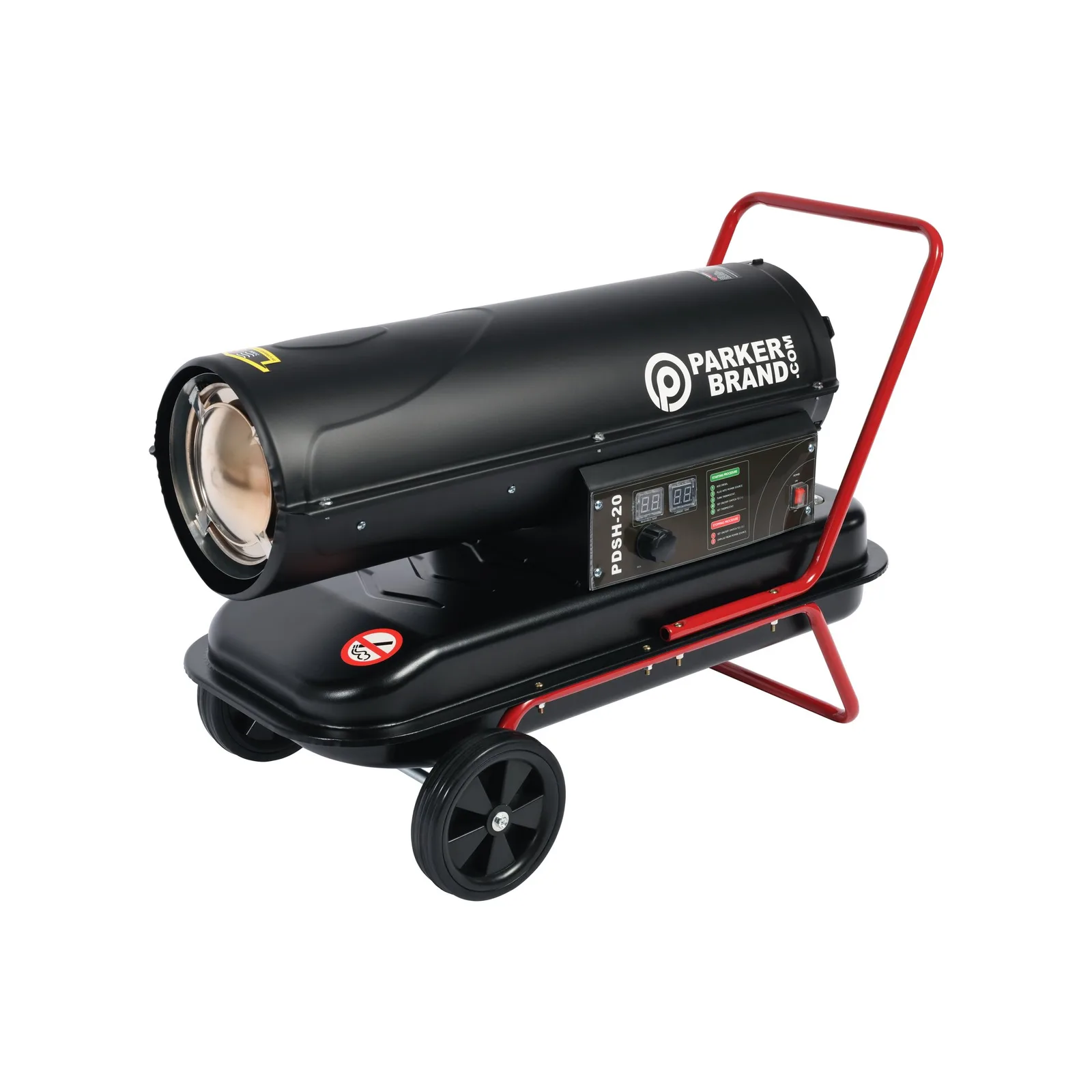
The heater burns diesel in a combustion chamber, and a mains-powered fan (they do need plugging in) blows the heat out across the space. They warm up within seconds and push out a lot of heat for the money, which is why they're popular for workshops, large garages, barns, warehouses and big greenhouses. Our models have a thermostat you can set from 5 to 55°C, plus wheels so you can move them where you need them.
Which size do you need?
- 20kW (69,000 BTU): large double garages and workshops. 19 litre tank.
- 30kW (100,000 BTU): bigger workshops, barns and small units.
- 50kW, 70kW and 100kW: warehouses, agricultural buildings and large commercial spaces.
As a rule of thumb, a draughty or poorly insulated building needs the next size up. A heater that runs comfortably below full power will also use less fuel.
Safety first: read this before you light it
Any heater that burns fuel produces exhaust gases, including carbon monoxide, which you can't see or smell.
- Ventilation is essential. Always follow the ventilation guidance in your manual, and never use a diesel heater in a sealed space.
- Never use one in living areas, bedrooms or anywhere people sleep. These are for working spaces.
- Fit a carbon monoxide alarm in the space you're heating.
- Keep clear space around the heater, especially in front of the outlet, and keep it well away from fuel, solvents, paint, sawdust and anything flammable.
- Refuel only when it's switched off and cool, and never in the room while it's running.
- Stand it on a flat, stable, non-flammable floor, and never leave it running unattended.
Fuel and running tips
- Use clean fuel as specified in the manual. Water or dirt in the fuel is the most common cause of poor running.
- Store your fuel properly. See our guide to storing fuel safely and legally, and our portable diesel tanks if you need to keep more on site.
- Insulate where you can. Draught strips on the garage door and insulating the roof make a heater go much further.
Want an electric option for a smaller space? Our 3kW electric fan heater needs no fuel and produces no fumes.